Iconoclasts
Syria, Afghanistan and China.
2024/2025
Iconoclasm is the belief and action of the destruction of religious imagery or monuments, and the physical act of fighting ideas and traditions. With the literal meaning of ‘image-breaking’, it occurs frequently for religious and political reasons. This photo journal explores the destruction of religious art, buildings and monuments across Syria, Afghanistan and China, by both fundamentalists and by authorities.
During Syria’s brutal conflict, many ancient and religious artworks and sites were intentionally destroyed due to religious ideology. Palmyra’s two occupations by ISIS between 2015 to 2017 led to the widespread destruction of its ancient and religious heritage, with pagan roman statues beheaded in museums, and the Temple of Bel reduced to rubble. Similarly, in Maaloula, a Christian town near Damascus, saw Christian icons, symbols and places of worship deemed ‘un-islamic’ intentionally targeted by the Al-Qaeda backed Al-Nusra front. The churches bear the scars in their plastic replacements of what was burned. These photographs were taken in the month before the collapse of the Assad regime.


The Buddhist heritage of Afghanistan has suffered irreparable damage under the Taliban regime. Most famously the enormous sixth-century rock hewn buddha statues in Bamiyan, central Afghanistan, which were destroyed by the Taliban in 2001. The statues were deemed to be un-Islamic idols which directly contrasted with the groups fundamentalist religious law, and the city is now overlooked by ominous coffin like holes where Buddha once sat. Heavily armed Taliban guards and shacks housing pieces of the Buddhas sit in the sand and dust at the foot of the mountains today. across Afghanistan, ancient Buddhist stupas still exist despite years of neglect and war damage.


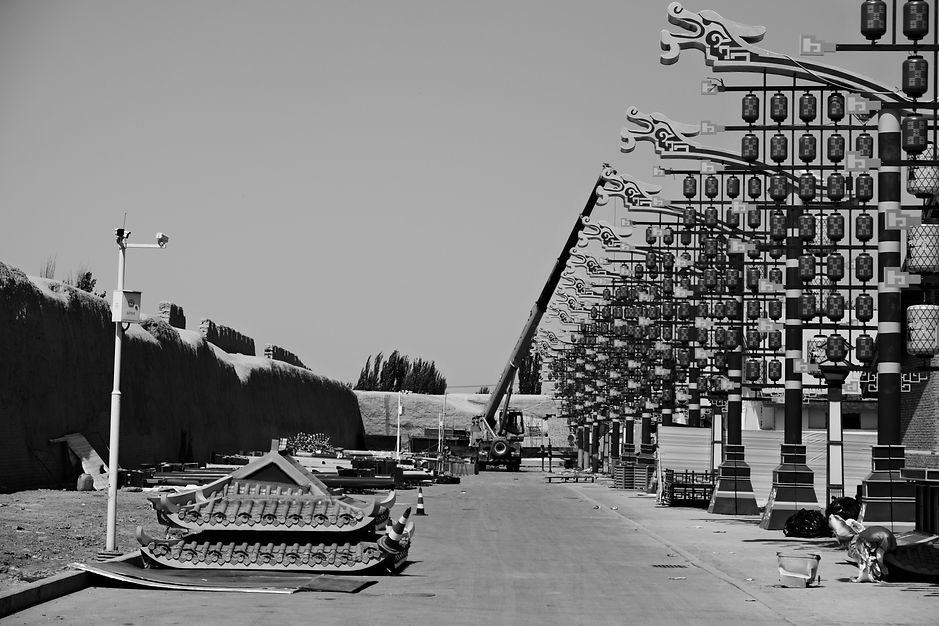
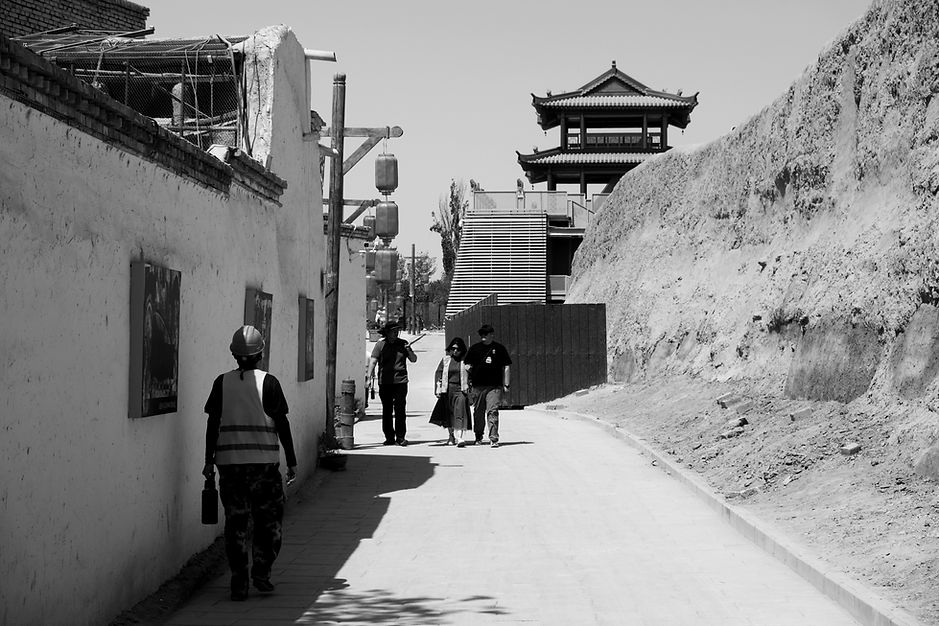
In Xinjiang, Chinas largest and westernmost province, is home to the Uyghurs, a predominantly Muslim Turkic ethnic group. After years of rising tensions and outbreaks of separatist violence, the Chinese government launched a mass scale crackdown on Islam and Uyghur culture in 2017, resulting in mass detentions, surveillance and re-education camps. Thousands of mosques in the region have been destroyed, damaged or repurposed, with soldiers surveiling the outside. Many other shrines, pilgrimage sites and areas of Islamic importance have been destroyed or turned into tourist destinations with a ‘Disneyland’ feel. Authorities have increasingly redesigned public spaces to conform to Han Chinese culture, fitting mosques with Chinese style roofs over domes and demolishing mud brick Uyghur settlements.