Middle East Journal | Kuwait | Jan 2026
Failaka Island - Ghost of the Gulf

20 Miles off Kuwait’s coast, away from the flashy oil-revenue skyscrapers and American fast-food chains is Failaka island. Once a peaceful island of about two thousand residents, mostly in its only town Zoor, is now a silent ghost town frozen in 1990. At the start of the Gulf war when Iraq invaded Kuwait, Iraqi special forces and marines quickly overwhelmed the Kuwaiti garrison stationed there and occupied the island until early1991. The Iraqi forces expelled the two thousand residents of Failaka to Kuwait City and essentially used the town of Zoor as target practice for an array of weapons, destroying homes, businesses and infrastructure. Upon liberation of the island, very few families moved back leaving this island in the Persian Gulf a symbol of the first Gulf War and the Iraqi occupation.

Whole neighbourhoods stand empty covered in bullet holes with belongings remaining inside. Once Failaka was free from Iraqi occupation, the government bought up the vast majority of property and land on the island from those who were forcibly removed. It was initially thought that it would be redeveloped into a resort island to attract tourists both from Kuwait and abroad, even potentially allowing alcohol, but as of 2026 no plans or redevelopment has occurred. A handful of families did return to the island however, refusing to sell to the government despite increased pressure and offers, and continue to partially live on the island. It is estimated that the residential plots on the seafront facing Kuwait City is valued at around 700,000 Kuwaiti Dinar, about 2.3 million USD.


Despite the destruction caused to the Island, liberation if Failaka was achieved without any large-scale fighting with Kuwaiti or Coalition forces. In March of 1991 the United States led coalition, alongside bombing, deployed psychological warfare tactics which swiftly broke the morale of the fourteen hundred Iraqi personnel on the island. This included the use of loudspeakers on aircraft and resulted in the surrender of the Iraqi forces.
During the occupation the Iraqis mined the island, particularly the beaches fearing a coalition invasion. Although demining cleared the island after the invasion, Iraqi military hardware has been left on purpose as a monument. These include tanks, artillery guns and armoured and logistics vehicles, many of which came from the Soviet Union/Russia. Today Zoor and the desert around is often used for police and military training with an army base located just outside the town.


Multiple schools stand decaying on Failaka, from nursery to high schools. The schools were used by Iraqi personnel during their time on the island, as bullet casings are scattered all across the floors and playgrounds. Many walls, both inside and out have bullet holes where soldiers would practice their grouping. Evidence such as courtyards full of furniture and books and paper across classroom floors indicate the Iraqis trashed and looted the schools. Many of the students who attended these schools during the time of the invasions are now well into their fifties, and the schools has become a places some former residents come to visit for nostalgia.

Visiting a small camel farm just outside Zoor is Yusuf, a member of the Kuwaiti Police who occasionally comes to the island to partake in training exercises, often using live ammunition. He decided to remain on the island for an extra day after the training was complete as Failaka island holds sentimental value for him. Located at the southern end of Zoor is the house in which he spent the first few months of his life, as many generations of his family come from the town. Despite being in a state of disrepair he visits his parents and grandparent’s old houses, still with the decaying furniture inside over thirty years later. As a baby, Yusuf was one of the two thousand people forcibly expelled from the island during the Iraqi occupation, and he explains how although he does not have memories of life here, he remembers visiting the island with his grandparents when they were alive and hearing the stories about the quiet laid back life on the island before the war. Despite never returning, Islanders have kept a tight nit community alive inside the ever-modernising Kuwait City, with regular social events hosted between the island’s former residents. Even Yusuf has close friendships with the children of former residence and explains how ‘Failakans’ stick together even down through generations who never knew of life on the island.


‘Free Kuwait’ is graffitied outside of a beachside residence which was presumably hit with a missile before the Iraqi surrender in 1991. Despite many of the houses in this neighbourhood surviving the occupation, over 30 years of neglect has rendered most of the properties uninhabitable.
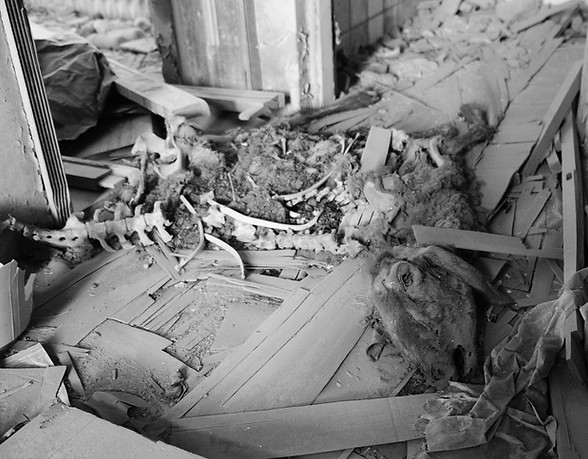
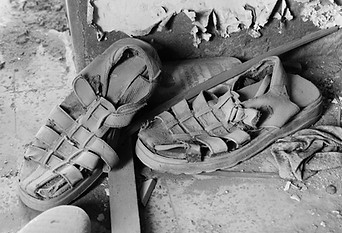
The houses of Failaka are filled with the belongings of those who once lived in them, and indicate during the expulsion of residence, people hastily were told to pack and leave. Kitchen utensils, clothes and children’s toys litter the floors of houses with some walls still decorated with football or music posters. Iraqi looting also would have occurred within these premises in the hunt for valuable goods. A dead lamb is rotting in the hallway of one former residence, likely one that got lost from its flock as a handful of shepherds still exist on the island.

Kuwait’s love of big American cars can easily be seen in the ruins and the abandoned garages of properties nobody ever returned to. Eighties and nineties Chevrolets, Dodges, Fords and Cadillacs have been sat rusting away in the salty sea air since the invasion as if on the set of a nineties Arabian zombie film. Failaka has however become somewhat of a popular off road weekend destination for Kuwaitis wanting to escape the city. The Ferry that docks at Zoor’s beach often takes four by fours, usually equipped with roof tents and camping gear, to the island regularly where campers can be seen in the desert around the town.


The bank of Kuwait building in Zoor is the most striking remnant of the Iraqi occupation on the island, and arguably the most famous. Initially opened only days before the Iraqi forces occupied the island, the bank was used for relentless target practice by troops leaving the building covered in bullet holes. The bank was looted by the Iraqis and its contents transported off the island, inside ‘Free Kuwait’ graffiti and Kuwaiti flags are spraypainted across the walls in each room. Yusuf points out how the bank shows Iraq’s total disregard for the island and explains how many Kuwaitis who remember the invasion still hold deep resentment for Iraq despite Saddam Hussein being deposed a few years later by the Coalition.
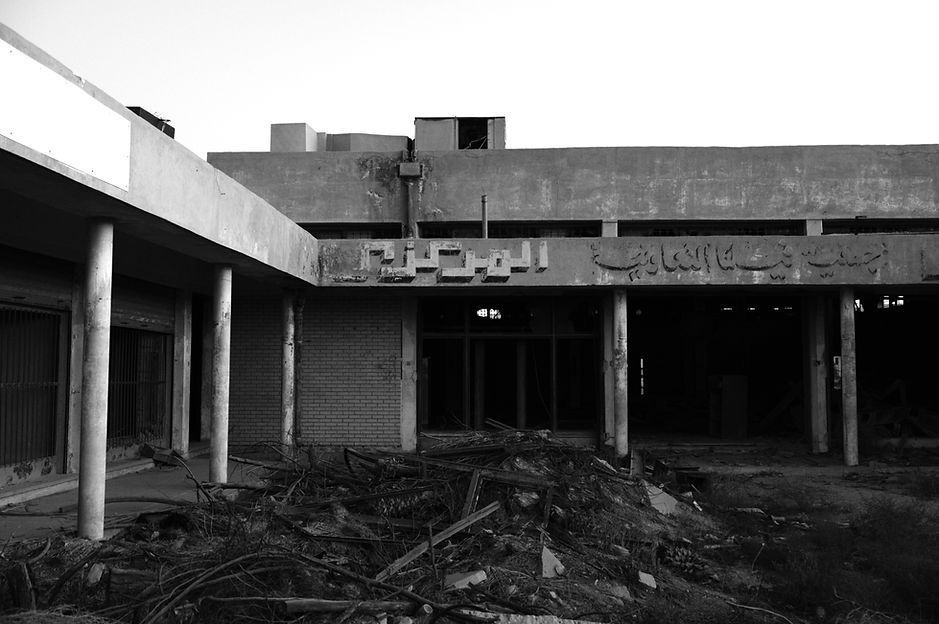
An old supermarket in the centre of Zoor, still with refrigerators and furniture inside. Small rooms filled with smashed plates and teacups where cafes and delis used to be line the walkways down the side. The only sound is the wind rattling the thin metal beams once used to hold the ceiling tiles up.
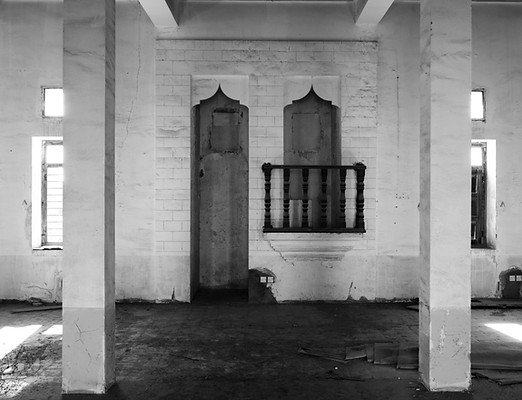
One of the abandoned mosques in Zoor tell the same story as the bank does, disregard for the island by the Iraqi forces as similar to the other buildings in the town. The mosque was also looted and used for target practice, as bullet holes in groupings are visible on the walls surrounding the courtyard of the mosque. Many of the other mosques on the island which sit abandoned also were abused by Iraqi troops despite many being Muslim themselves. Failaka does have one functioning mosque however by the ferry port, and a single call to prayer can still be heard echoing across Zoor today.

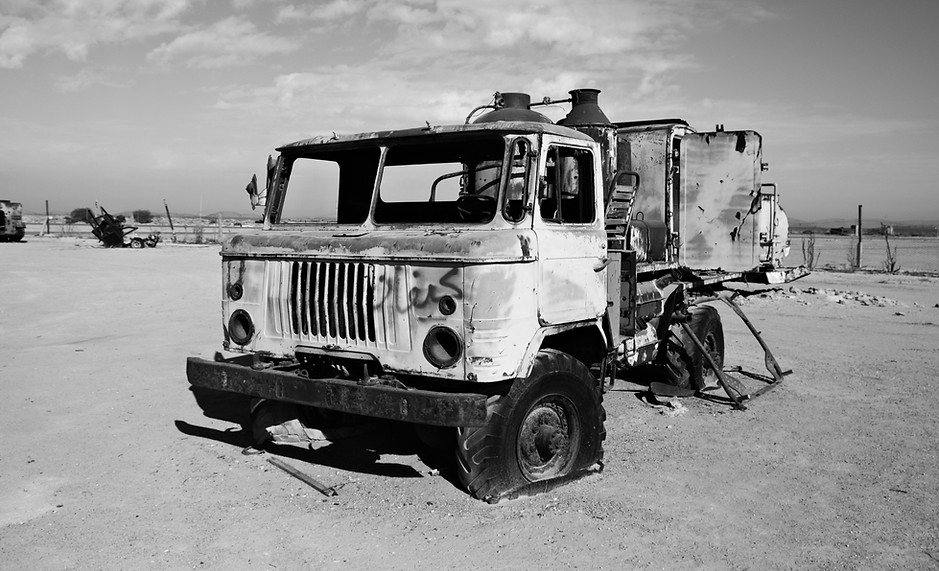
A mobile cremation unit on a Soviet supplied GAZ truck left abandoned in a scrapyard in the desert outside of Zoor. On the grill ‘Kaifan’ is spraypainted on, this residential district of Kuwait City saw chaotic urban fighting as the Iraqi army moved in to occupy the city. The scrapyard is frequently visited by Kuwaitis as it contains Iraqi military hardware left from the surrender.
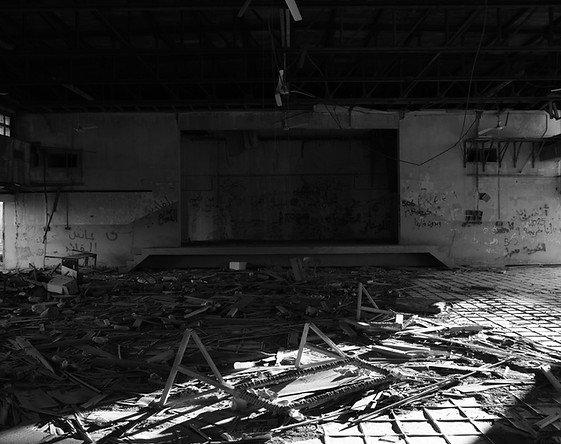


Failaka island is both a monument and a museum of the Iraqi invasion in itself and is likely to continue to be so for the foreseeable future due to lack of any plans of redevelopment. The Archaeological heritage of the island has also been a factor in the lack of any plans, as the government has put millions into excavations and research into the many ancient sites located around the island. The culture and the community of this once peaceful island lives on however amongst the noise and chaos of Kuwait City, with families and their children, such as Yusuf, continuing the legacy of Failaka. For now, the island is frozen in the 1990s offering refuge from the city and a nostalgic weekend trip for those who once called Failaka home.